
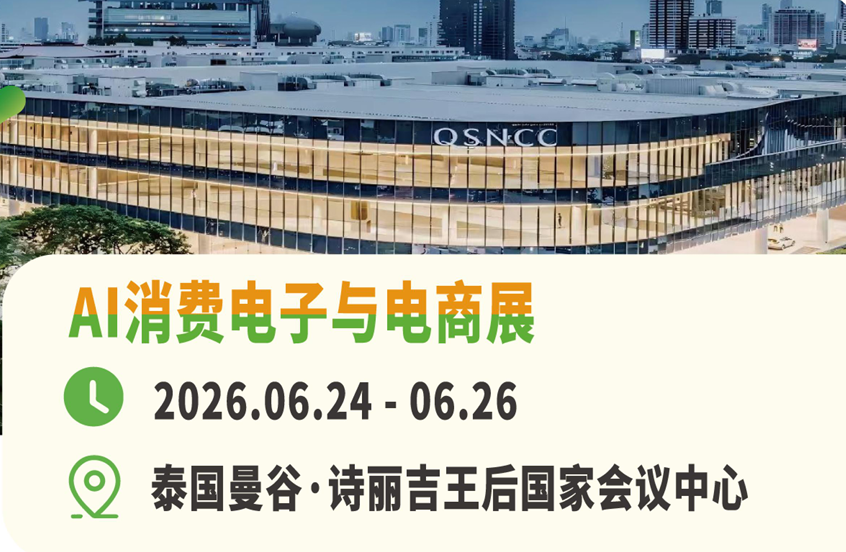
2026 AI Consumer Electronics and E-commerce Exhibition in Bangkok, Thailand (AIE)
Description
Thailand AI Consumer Electronics and E-commerce Expo (AIE)
Exhibition Date: June 24–26, 2026
Venue: Queen Sirikit National Convention Center, Bangkok, Thailand (QSNCC)
Organizers: UniEx, Shenzhen Cross-border E-commerce Supply Chain Services Association
Co-organizers: Shenzhen Logistics and Supply Chain Management Association, Shenzhen Artificial Intelligence Industry Association, Shenzhen World Exhibition Service Co., Ltd.
Sponsors: Shenzhen Battery Industry Association, New Energy Storage Industry Association, BigSeller, Shenzhen Automobile Industry Federation, Shenzhen Intelligent Terminal Industry Association, Shenzhen Intelligent Connected Transportation Association, ASCA, ESCA.
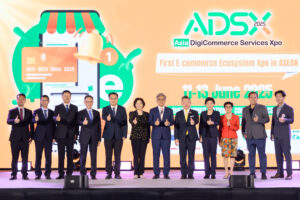
Highlights of the Exhibition:
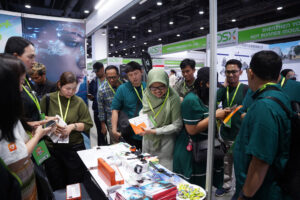
In the fields of consumer electronics, artificial intelligence, new energy storage, intelligent connectivity, and automotive technology in Southeast Asia, cross-border e-commerce platforms, sellers, products, and supply chains are brought together.
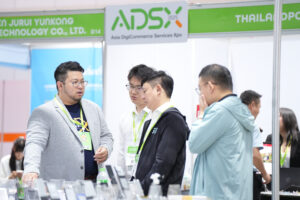
Over 200 one-on-one business meetings were arranged before the exhibition with buyers from countries such as Malaysia, Thailand, India, and the Middle East, enabling seamless connections between buyers and sellers and facilitating genuine international expansion for businesses.
The top-level project management teams are based in China, Singapore, and Thailand, ensuring a perfect combination of international expertise and local knowledge.
Government support: This event has been recognized as a key overseas exhibition to be supported by Shenzhen in 2025.
The organizers have established direct affiliates in the Americas, Europe, and ASEAN, enabling global collaboration.
Focusing on the digital economy, smart manufacturing, cross-border trade, and service trade, this exhibition aims to create a vibrant ecosystem for cross-border industries and supply chains.
Scope of Exhibition:
Artificial Intelligence Exhibition Area
Core AI technologies and platforms: Large language models, AI agents, computer vision and speech technologies, AI chips, AI development platforms, and algorithm platforms.
Embodied intelligence and robotics: Collaborative robots, commercial service robots, educational and entertainment robots, industrial robots, drones, and special-purpose robots.
AI-enabled devices and innovative applications: AI-powered PCs and smartphones, AI wearable devices, and AI-driven innovative hardware (such as cameras, voice recorders, toys, etc.).
AI applications in various industries: Intelligent sensor networks, edge computing, and IoT platforms; applications in areas such as smart cities, smart finance, smart education, smart healthcare, and AI-generated content creation.
E-commerce and Digital Business Exhibition Area
Smart Living and Consumer Electronics Exhibition Area
Smart Living and Consumer Electronics: Personal and Home Entertainment
Headsets, speakers, Bluetooth devices, e-books, action cameras, Vlog equipment, smart TVs, laser TVs and projection devices, home theaters, high-end audio systems, streaming media devices
Smart Homes and Home Appliances
Whole-house smart control systems, smart lighting, smart security systems, smart curtains, smart home appliances
Computers, Office Equipment, and Gaming
Laptops, tablets, desktop computers, and related accessories, smart office equipment, gaming and esports peripherals, VR/AR devices
Digital Health and Sports Technology
Smart healthcare and health devices (wearable health monitoring devices, AI-assisted medical tools, etc.), smart sports products, smart sports equipment
Intelligent Transportation and Automotive Technology Exhibition Area
New Energy and Smart Vehicles
Electric vehicles, hybrid vehicles, commercial electric vehicles, unmanned delivery vehicles, electric two-wheeled/three-wheeled vehicles, electric scooters, etc.
Automotive Electronics and Intelligent Cockpits
In-vehicle infotainment systems, dashcams, in-vehicle navigation and positioning systems, and advanced driver assistance systems.
Core Components and Connected Vehicles
Autonomous driving technology and sensors, connected vehicle technologies and in-vehicle communication systems, automotive electronic components, and electronic control systems.
New Energy and Energy Storage Exhibition Area
Core battery technologies and materials: various types of power batteries, energy storage batteries, consumer electronics battery cells, battery cathode/anode materials, electrolytes, separators, and other key materials; battery manufacturing equipment, testing instruments, and environmental protection and recycling technologies.
Energy storage systems and solutions: portable energy storage and mobile power sources, home energy storage systems (HESS) and industrial/commercial energy storage solutions, grid-level energy storage, photovoltaic-storage integration solutions, battery management systems, energy management systems, energy storage inverters.
Digital Energy and Charging Facilities: smart microgrids and energy Internet of Things technologies, electric vehicle charging stations, photovoltaic modules, inverters, and intelligent energy management platforms.
E-commerce and Digital Commerce Exhibition Area
Cross-border e-commerce platforms and service providers: international e-commerce platforms, tools, and services for building independent online stores, e-commerce operation management, and integrated marketing services.
Logistics and supply chain services: cross-border logistics services (sea/land/air transport, multimodal transport), customs clearance, overseas warehouses, bonded warehouses, intelligent warehousing and sorting, transportation hubs such as ports, airports, and railways.
Payment, compliance, and fintech: cross-border payment solutions and digital wallets, tax compliance, supply chain finance, and insurance services.
Audience Types:
End-users and decision-makers in procurement
1.1 Corporate Procurement and Integrators: Procurement departments of large enterprise groups, system integrators and solution providers, leaders in digital transformation, project procurement and bidding managers.
1.2 Manufacturing and Industrial Enterprises: Automobile manufacturers, auto parts suppliers, electronics manufacturers (OEM/ODM), industrial automation and smart manufacturing companies, as well as entities seeking to transform and upgrade their traditional manufacturing operations.
1.3 Retail and Consumer Goods Channels: Large chain retailers, distributors, and agents of consumer electronics and home appliances, department stores, shopping centers, convenience store procurement departments, and retail store owners.
1.4 E-commerce and Cross-border Trade Buyers: Sellers on cross-border e-commerce platforms, local e-commerce sellers, independent website operators, import and export trade companies, and wholesalers and retailers.
1.5 Logistics and Supply Chain Service Providers: Domestic logistics and transportation companies, international freight forwarders, overseas warehouse and smart storage operators, last-mile delivery services, as well as transportation hubs such as airports and stations.
1.6 Automotive and Transportation Services: Dealers and agents of new energy vehicles, ride-hailing platforms and drivers, charging station operators and energy service providers, automotive after-sales service providers, and fleet operators.
1.7 Real Estate and Smart Buildings: Real estate developers, integrators of smart buildings and smart homes, hotel and resort owners, property management companies, and engineering contractors.
1.8 Financial and Payment Institutions: Commercial banks and fintech companies, payment service providers and digital wallets, insurance companies, supply chain finance, and financing companies.
1.9 Energy and Public Utilities: Power companies and grid operators, new energy development and investment companies, renewable energy project developers, as well as providers of energy storage system integration and services.
1.10 Healthcare and Education Institutions: Hospitals and clinics, pharmaceutical and medical device distributors, health management and wellness organizations, universities, and education and training institutions.
1.11 Hotel, Tourism, and Service Industries: Procurement departments of hotel chains, tourist attractions and theme parks, food and beverage chain businesses, commercial complexes, and entertainment venues.
1.12 Government and Public Utilities: Planners and purchasers from government departments responsible for procurement, urban development, transportation, infrastructure construction, national energy security, customs, etc., as well as managers of industrial parks.
1.13 Agriculture and Food Industries: Large farms, agricultural conglomerates, food processing and beverage manufacturers, and companies involved in the import and export of agricultural products.
Technology, Marketing, Investment, and Professional Services
2.1 Technology R&D
AI and algorithm development teams, product design engineers, hardware development and embedded systems engineers, software and application developers
2.2 Market Development and Cooperation
Product managers and market research analysts, companies seeking technical cooperation, companies looking for market expansion and channel partnerships
2.3 Investment Institutions
Venture capital firms, private equity funds, angel investors, industry funds, and government-backed funds
2.4 Professional Service Providers
Industry associations and organizations, market research firms, legal and compliance services providers, certification and testing agencies, marketing and brand promotion service providers, content creators and social media platforms, research institutions, talent recruitment agencies
Side Events
Several thematic forums will be held during the expo:
1. 2026 BigSeller Thailand E-commerce Summit
2. AI Technology and Smart Living
3. The Trend Towards Intelligence in Consumer Electronics
4. Future Transportation and Autonomous Technologies
5. New Opportunities in Cross-border E-commerce
Market Context and Opportunities for Going Global: Focusing on AI-Driven Consumer Electronics and E-commerce
1. Strategic Importance: Thailand as China’s Primary Trading Partner and Growth Engine
Thailand is China’s largest trading partner, with a population of nearly 700 million, representing immense potential in the consumer market. In 2024, bilateral trade reached $982.3 billion, an increase of 17 times compared to 2002. Leveraging its geographical advantages and the “Eastern Economic Corridor” initiative, Thailand is gradually becoming an important hub for Chinese companies seeking to expand into overseas markets.
2. Policy Benefits: Thailand’s Strategic Upgrade within a Multilateral Framework
The United States has recently implemented a comprehensive zero-tariff policy for Thailand, covering 92% of goods, enhancing the competitiveness of “Made in Thailand” products, and accelerating the transfer of global production capacity to this region. Additionally, the China-ASEAN Free Trade Area Agreement 3.0 focuses on emerging areas such as the digital economy and green technology, providing institutional support for industries like AI-driven consumer electronics and e-commerce.
3. The Digital Revolution: ASEAN’s Intelligent Transformation Creates New Opportunities
The internet penetration rate in ASEAN is continuously increasing, and the e-commerce ecosystem is becoming increasingly mature. The Free Trade Area Agreement 3.0 has made breakthroughs in areas such as duty-free electronic transactions and rules for cross-border data flow, creating a vast market for products like AI-driven consumer electronics and smart devices, and further promoting the development of the regional digital ecosystem.
4. Supply Chain Reconfiguration: ASEAN as a New Global Industrial Hub
There are new trends in the global supply chain restructuring: China and Thailand are developing differentiated roles within this system. For example, 65% of Vietnam’s increased exports to the United States still rely on Chinese raw materials, indicating a deep integration of the two economies. Companies with technological advantages have a clear edge; for instance, Chinese TOPCon photovoltaic panels command a 32% premium over Thai products, yet they continue to see order growth due to their 26.1% higher efficiency. This not only accelerates China’s transition towards high-end manufacturing but also presents significant opportunities for Thailand to develop its mid- to low-end production capacity, making it a key link in the global supply chain. Both challenges and opportunities coexist in this process of industrial upgrading.
5. A New Phase for Chinese Companies Going Global: From Product Export to Joint Ecosystem Development
The development model of Chinese companies in ASEAN is shifting from commodity trade to technical collaboration and supply chain integration. In cutting-edge fields such as artificial intelligence and new energy, Chinese companies are transitioning from price competition to technology-led innovation through the export of technology and resource integration.
A professional team operates efficiently with a local approach, ensuring the high quality of the audience.
The TOP international exhibition organization team consists of seasoned professionals from industry organizations such as Reed Exhibitions UK, Informa UK, Munich in Germany, Frankfurt in Germany, and Cologne in Germany. This team works tirelessly to build business networks and buyer databases within the ASEAN region, helping Chinese companies expand their operations overseas and secure new business opportunities.
Business associations, organizations, and specialized buyer groups: The organizing committee’s teams in Singapore and Thailand maintain close contacts with government departments, business associations, and industry experts in ASEAN countries. By doing so, they gain a thorough understanding of the investment environment in Southeast Asia, identify local market demands, and effectively match companies’ investment and business development needs. This reduces the risks associated with expanding overseas and enhances the success rate of such initiatives.
A variety of methods are used to attract professional buyers:
① International teams in Singapore and Thailand invite key buyers.
② Call centers located in Thailand, Singapore, and Vietnam.
⑤ Promotion in local industrial parks in ASEAN.
⑥ Social media marketing, including recruitment through platforms like Line, YouTube, Facebook, WhatsApp, and TikTok, as well as SNS and EDM email campaigns.
⑦ Press releases published in media outlets in Singapore, Vietnam, Thailand, Indonesia, Malaysia, India, and Australia.
⑧ High-profile press conferences are held to reach professionals from various sectors through local mainstream media.
⑨ Long-term sponsorship agreements are established with local cultural and sports events to enhance brand awareness.
Exhibition Fees
Standard booth (3 meters x 3 meters per booth): 5,500 Singapore dollars per booth
Unfurnished space: Minimum rental area is 36 square meters; fee is 550 Singapore dollars per square meter.
Kind Reminder:
1. A 10% surcharge is applied to all booths with two or three sides that are open.
2. The standard booth comes equipped with the following: a company name sign, 1 consultation desk, 2 chairs, 2 lights, 1 trash can, and 1 220V power socket.
3. For unfurnished booths, all costs related to setup and the use of facilities are to be borne by the exhibitor.